
Korean investors are buying up Chinese ETFs.

2026-03-12 11:30

With the increasing international attractiveness of China's ETF, more and more overseas investors are using ETFs to easily allocate high-quality A-share assets.
With the continuous increase in the international appeal of China's ETFs, more and more overseas investors are using ETFs to easily allocate high-quality A-share assets. In the past month, three ETFs were included in the list of the top 20 A-share securities net bought by South Korean investors, namely the YinHua CSI Innovative Pharmaceutical Industry ETF, the JiaShi SSE STAR Market Chip ETF, and the YiFangDa CSI Artificial Intelligence Theme ETF.
Among them, the YinHua CSI Innovative Pharmaceutical Industry ETF was the most bought ETF by South Korean investors in the past month, with a net buy amount of 1.4805 million US dollars.
Although the South Korean stock market has been volatile recently, the year-to-date performance is still impressive. Against the backdrop of a strong performance in the domestic market, South Korean funds are actively increasing their exposure to Chinese assets through ETFs, fully reflecting the investment appeal of China's innovative pharmaceutical and artificial intelligence sectors.
Industry insiders point out that China's innovative pharmaceutical sector has a high cost-effectiveness ratio due to favorable factors such as policy support, international expansion, and improved profitability, and it has long-term investment value. The artificial intelligence and semiconductor industries in China not only have a vast market space but also have a more stable supply chain, making them more cost-effective in the current international situation.
South Korean investors heavily buy Chinese innovative pharmaceutical ETFs
In the past month, South Korean investors have increased their investments in Chinese technology assets. As of March 11, the YinHua CSI Innovative Pharmaceutical Industry ETF was the most bought ETF by South Korean investors in the past month, with a net buy amount of 1.4805 million US dollars.
It is worth noting that the South Korean stock market led the global market earlier this year, and even though there has been recent volatility due to international developments, the year-to-date returns are still significant. As of March 11, the year-to-date increase in the South Korean KOSPI index remained as high as 33.12%. Despite the impressive performance of the domestic market, South Korean investors are still increasing their allocations to Chinese innovative pharmaceutical assets, highlighting the investment appeal of China's innovative pharmaceutical sector.
In the past six months, the A-share innovative pharmaceutical sector has experienced a volatile adjustment, with valuation continuously digesting. Currently, the cost-effectiveness of allocation is prominent, which is one of the important factors attracting international investors. Wind data shows that as of March 9, 2026, the price-to-earnings ratios (TTM) of the Hong Kong Innovation Drug Index (987018.CNI) and the CS Innovation Drug Index (931152.CSI) are 33.81 times and 42.94 times, respectively, with historical percentiles of only 21.87% and 50.06% in the past ten years, indicating a relatively high safety margin in allocation.
In addition, from a policy perspective, innovative drugs have once again received policy support. In the 2026 government work report, biomedicine was for the first time positioned as an emerging pillar industry. Industry institutions believe that this positioning reflects the rapid improvement in quality and scale of the domestic biopharmaceutical industry. The biopharmaceutical industry has both a humanitarian and an industrial nature, and this positioning is expected to further strengthen the industrial nature of biopharmaceuticals and enhance its strategic position.
The government work report also emphasized the acceleration of the development of commercial health insurance, the promotion of high-quality development of innovative drugs and medical devices, and better meeting the diversified medical and pharmaceutical needs of the people. Some industry insiders pointed out that the basic medical insurance is focused on "basic protection," while commercial insurance tends to be more focused on cutting-edge, high-value drugs, which is beneficial for promoting the high-quality development of the biopharmaceutical industry and meeting the goal of satisfying the diverse health needs of the population.
A large public fund research analyst told reporters that as innovative pharmaceutical companies reach the break-even point, with intensive clinical data catalyzing throughout the year, combined with successful progress in overseas clinical trials, the innovative pharmaceutical sector will usher in significant investment opportunities.
AI sector ETFs are also favored by South Korean investors
In addition to the innovative drug ETFs, Chinese artificial intelligence-related companies are also favored by South Korean investors, some of whom are making overall arrangements through ETFs.
As of March 11, the net buy amounts of the JiaShi SSE STAR Market Chip ETF and the YiFangDa CSI Artificial Intelligence Theme ETF by South Korean investors in the past month were 1.0412 million US dollars and 0.675 million US dollars, respectively.
In addition, South Korean domestic asset management companies have also launched ETFs focusing on the Chinese artificial intelligence industry, providing more channels for investors to allocate.
According to the Korean Economic Daily, Solactive announced a collaboration with KB Asset Management to launch the RISE China AI Semiconductor Top 4 Plus ETF, which tracks the Solactive China AI Semiconductor Top 4+ Index.
This product aims to provide investors with channels to invest in companies related to China's artificial intelligence and semiconductor industry chain. The index tracking the product includes a total of 15 companies. Soojin Lee, Head of KB Asset Management's ETF Products Department, stated, "The construction of China's domestic artificial intelligence infrastructure is driving the development of the semiconductor and related components field. Our ETF covers wafer contract manufacturing, AI chips, optical modules, materials, and equipment companies, aiming to more comprehensively reflect this ecosystem, with more balanced attributes compared to single-track strategies."
It is worth noting that South Korea domestically has scarce chip companies like Samsung and SK Hynix, but while South Korean funds are increasing their exposure to local chip companies, they are still actively adding positions in Chinese artificial intelligence assets, reflecting the investment appeal of China's artificial intelligence industry.
When analyzing the reasons for South Korean funds increasing their exposure to Chinese artificial intelligence assets, industry insiders told reporters that, firstly, local targets like Samsung and SK Hynix have seen high price increases, leading investors to seek assets with more cost-effective valuations; secondly, the Chinese artificial intelligence industry has a wide market space, rich listing subjects, which can accommodate larger-scale overseas fund deployments; and thirdly, the Chinese industrial supply chain is well-established, less affected by international disturbances, with stronger supply chain stability, while the South Korean industrial chain is more sensitive to international oil prices and global supply chain fluctuations, making it riskier in the current environment.


RECOMMEND

Advanced investment education | FATCA & CRS leading global tax transparency, who is most affected?
04/08/2025
34 年股市老兵“曾阿牛”:跑赢纳指 110%仍不满足!从第一代股评家到对冲基金管理人的经历
14/06/2025
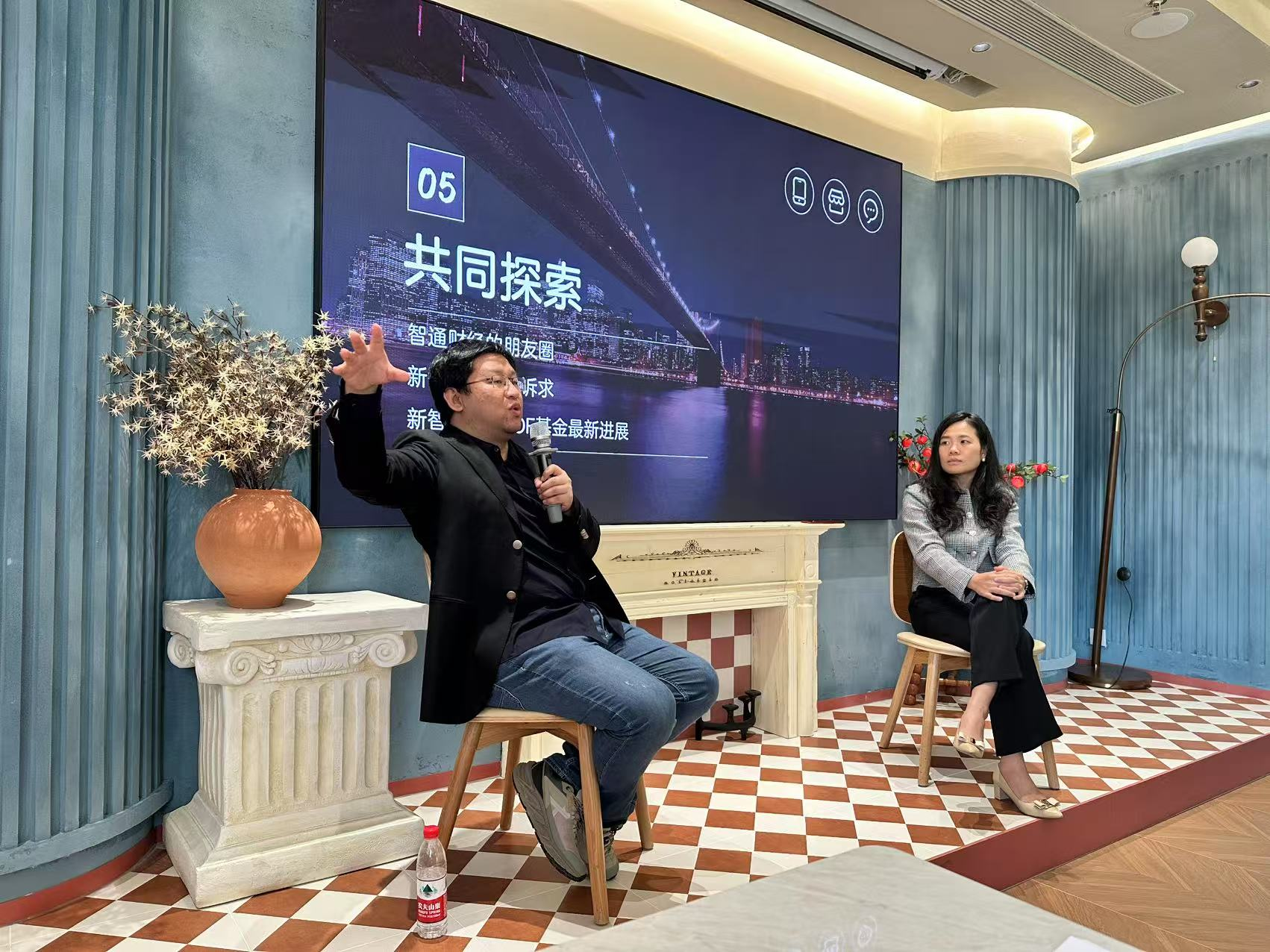
The first closed door meeting of the New Intelligence Roundtable Faction and the US Dollar Foundation was successfully held in Shanghai
01/05/2025
Add the WeCom
 (Mainland) +86 13918483280(Hong Kong) 852-5606 7965
 marketing@inbfund.com
©️2013 - 2026 New Intelligence Future Technology Limited. All Rights Reserved

Customer Service

Add the WeCom