
Another 10 billion fund manager resigns, where is the way out for active equity after "de-starization"?

2026-03-12 20:59

Another billionaire fund manager has resigned.
The news of Fu Youxing, a fund manager with assets of billions, leaving his position has finally been confirmed.
On March 12th, Guangfa Fund announced that Fu Youxing had stepped down from managing Guangfa Stable Growth and Guangfa Ruyang three-year fixed opening products, and also announced his resignation.
The market was not surprised by this news. On February 13th of this year, Fu Youxing had already stepped down from the position of deputy general manager of the company. At that time, there were rumors in the market that he had other career plans, possibly involving private fund management.
Under the background of high-quality development, fund managers and other investment research talents are showing two major changes:
Firstly, public fund executives are no longer as sought-after as they used to be. Previously, the strategy was to retain talent through positions and salaries. However, due to factors such as salary restrictions, some senior fund managers are stepping down from executive positions to focus more on research rather than administrative tasks.
Secondly, companies are placing more emphasis on platform-based and systematic development rather than relying solely on individual fund managers. This change is related to the rapid market rotation, with star fund managers taking turns to shine briefly, and a diverse product lineup being the key to a fund company's success.
Another fund manager with billions in assets resigns
Fu Youxing is a senior fund manager in the industry, with nearly 24 years of experience in the securities industry and 13 years of fund management experience. Before stepping down, he managed a total of 102.76 billion yuan in assets for two funds, Guangfa Stable Growth and Guangfa Ruyang three-year fixed opening.
The fund under Fu Youxing's longest management is Guangfa Stable Growth, which he has managed for over 11 years. Established in 2004, Guangfa Stable Growth is a balanced stock and bond fund that has achieved a cumulative return of 1278.9% over 22 years, with an excess return of 955.44% compared to the benchmark, an annualized return of 12.87%, and an annualized volatility of 17.3%.
In terms of investment characteristics, he focuses more on the safety margin of stock prices, with a maximum drawdown of 6.55%. This risk control ability is significant for actively managed equity funds.
Regarding who will succeed Fu Youxing, the market is primarily concerned with the stability and continuity of performance. Fund manager turnover is a natural occurrence in the industry, and it is more important for the successor to continue managing the products effectively.
After Fu Youxing's departure, the two funds were managed separately by Zhou Zhishuo and Wang Ruidong.
Zhou Zhishuo took over Guangfa Stable Growth. He was appointed as the fund manager of this product on August 28, 2025, and managed it in partnership with Fu Youxing. Since his appointment, the fund has achieved a return of 11.64%. Zhou Zhishuo has over 16 years of experience in the securities industry, with over 7 years of experience as an investment manager and fund manager at public fund companies. He previously managed funds such as Invesco Small Cap Vanguard before joining Guangfa Fund in February 2025. Since then, he has taken on important roles and currently manages a fund with assets totaling 17.8 billion yuan.
Zhou Zhishuo is not a star fund manager; his investment philosophy focuses on the risk-reward ratio of individual stocks and residual risk as the core. He selects stocks from bottom-up research, pays attention to potential losses from each trade, sets strict reduction conditions, and aims for stability in the fund's performance.
Guangfa Ruyang three-year fixed opening will be managed solely by Wang Ruidong. He was appointed as the fund manager for the product on November 5, 2025, and during the transition phase, the fund achieved a return of 16%. Wang Ruidong is a fund manager trained by Guangfa Fund, with 13.5 years of experience in the securities industry and 5 years of experience in fund portfolio management. He has worked at Guangfa Fund for over 10 years and has been greatly influenced by Fu Youxing in stock selection and portfolio management.
This time, Guangfa Fund chose two younger generation fund managers to succeed Fu Youxing, aiming to maintain the stability of the products' risk characteristics, investment strategies, and styles.
After the shift away from star fund managers, the path for actively managed equity funds is still being explored
For the industry to achieve high-quality development, it must transition from relying on star fund managers to systematized empowerment, which has become a consensus in the industry.
Under a platform system, the three main types of public fund businesses are relatively clear:
1. Passive investment represented by ETFs;
2. Fixed income + strategies that aim for low drawdowns and absolute returns;
3. FOFs that target bank channels and have potential for investment consultation.
On the other hand, the transition path for actively managed equity funds, facing the reality of net asset value growth and share reduction, is still being explored.
Currently, only a few companies like Yongyin Fund can achieve large-scale expansion without relying on fund managers, while new methods like public fund technology beta funds are emerging. In market conditions where investment styles rotate rapidly, products that break through stand out, and investors may not remember the fund managers, but they do recognize the brand names of successful funds.
Platform development requires companies to have deep resource reserves, a strong support platform, continuous mechanism innovation, and a firm long-term commitment. Top companies like Guangfa and E Fund are also actively working towards these objectives through similar methods.
On the one hand, talent reserves are being strengthened by building a high-density, diversified talent structure to enhance organizational stability. This ensures diversity in investment capabilities, drives the organization to break through existing cognitive patterns and capability boundaries, and upgrades the research system iteratively.
On the other hand, organizational synergy is being promoted. For example, Guangfa Fund has established collaborative research teams and flexible strategy investment groups to facilitate research collaboration among personnel in specific areas such as emerging industries. The exploration of new strategies and models beyond traditional subjective long positions is encouraged, consolidating and optimizing the multi-platform, multi-strategy research system.
With a rich talent reserve and collaborative research breaking down barriers, especially against the backdrop of a bumper year for commodities, multi-asset strategies have become a focus.
Multi-asset strategies involve allocating core assets across multiple asset classes such as stocks, bonds, gold, and commodities to capture the upsides of a specific asset class during its growth cycle and sustain continued gains. At the same time, by diversifying risks with low correlations, portfolio volatility can be smoothed out.
According to reports, many fund companies, including E Fund, are eyeing opportunities in multi-asset strategy products.
Furthermore, as investors gradually shift away from star fund managers, more and more are realizing that, in the long run, "the brand impressions last longer than the fund managers.""Heroism of the individual" is failing, and no fund manager can be a long-term successful general. They all have their own strengths and weaknesses, as well as market styles that they may not adapt well to. While "hot products" are considered, long-term stability is equally important.This article is reproduced from "Caijing Society", GMTEight editor: Jiang Yuanhua.


RECOMMEND

Advanced investment education | FATCA & CRS leading global tax transparency, who is most affected?
04/08/2025
34 年股市老兵“曾阿牛”:跑赢纳指 110%仍不满足!从第一代股评家到对冲基金管理人的经历
14/06/2025
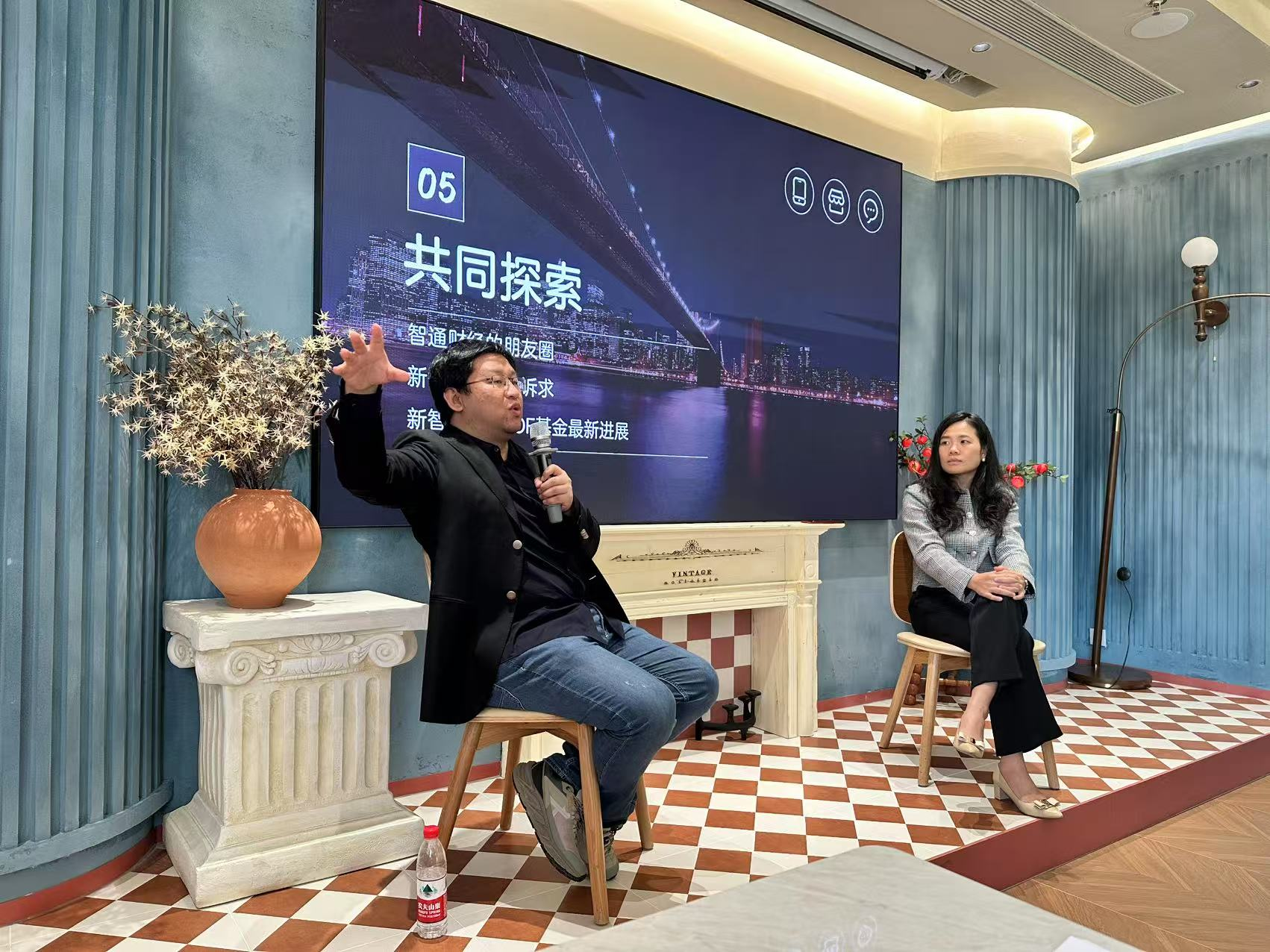
The first closed door meeting of the New Intelligence Roundtable Faction and the US Dollar Foundation was successfully held in Shanghai
01/05/2025

Add the WeCom
 (Mainland) +86 13918483280(Hong Kong) 852-5606 7965
 marketing@inbfund.com
©️2013 - 2026 New Intelligence Future Technology Limited. All Rights Reserved

Customer Service

Add the WeCom