
Swiss Long Aoshao Zhiming: The current trend of rising oil prices may continue to push up inflation in the United States until the middle of next year.

2026-03-16 16:24

Shao Zhiming expects that the current upward trend in oil prices may have the opportunity to continue driving up inflation in the United States until the middle of next year.
Swiss Longo has entrusted the Asian portfolio management director Zhao Zhiming with full authority. Zhao said that there is no sign of easing in the situation in Iran. The Iranian Foreign Minister welcomed discussion of proposals to end the war, but the United States is unwilling to negotiate. The transportation of oil through the Strait of Hormuz is still blocked, causing a shortage of crude oil supply, driving Brent crude oil prices to rise above $100 per barrel. He expects that this round of oil price increases may continue to lead to an uptrend in US inflation until the middle of next year.
Zhao pointed out that after oil prices have risen to the current level, the focus of the market has shifted to how long high oil prices will be maintained, their impact on global inflation, and how central banks will respond. "Currently, the futures prices of Brent crude oil for September and March of this year, and September of next year are $87, $77, and $74 per barrel, respectively, all significantly higher than a month ago, reflecting that under the current conditions, oil prices may not fall back to $75 until the middle of next year, which is a level with limited impact on the economy. It is expected that the US CPI will have room to rise in the next 12 to 18 months, which will limit the number of rate cuts by the Federal Reserve."
In addition, the Federal Reserve will announce its interest rate decision on Thursday (March 19th), with the market expecting rates to remain unchanged, focusing on the release of the dot plot and economic forecasts afterwards. He believes that Federal Reserve Chairman Jerome Powell has the opportunity to express the uncertainty of oil prices on US inflation expectations in the post-meeting press conference. "However, the US does not need a rate cut to support the economic situation. In addition, the current 2-year Treasury yield is 3.73%, reflecting market expectations that future interest rates will remain at current levels."
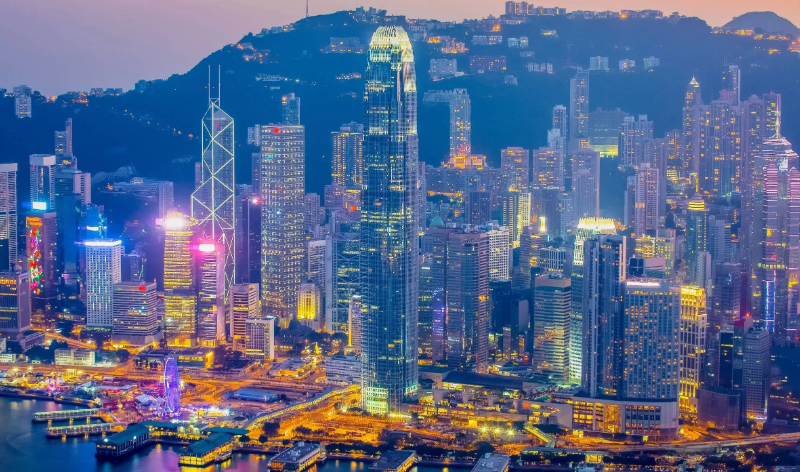
Zhao said that Hong Kong stocks have shown strong resilience to declines recently, mainly because emerging market funds are heavily invested in the Chinese, Taiwanese, and South Korean stock markets. When reducing positions, they first sell off in these markets. In addition, the "national team" has also entered the market, allowing the stock market to maintain a slow bull market trend.


RECOMMEND
Advanced investment education | FATCA & CRS leading global tax transparency, who is most affected?
04/08/2025

34 年股市老兵“曾阿牛”:跑赢纳指 110%仍不满足!从第一代股评家到对冲基金管理人的经历
14/06/2025

The first closed door meeting of the New Intelligence Roundtable Faction and the US Dollar Foundation was successfully held in Shanghai
01/05/2025

Add the WeCom
 (Mainland) +86 13918483280(Hong Kong) 852-5606 7965
 marketing@inbfund.com
©️2013 - 2026 New Intelligence Future Technology Limited. All Rights Reserved

Customer Service

Add the WeCom