
Public offering fund managers have introduced quantifiable performance indicators for salary assessment. Which fund managers are facing salary reduction pressure?

2026-04-18 11:06

Over the past three years, 1332 actively managed equity funds have underperformed the benchmark by more than 10 percentage points, leading 762 fund managers to face a 30% salary cut.
The salary assessment of public fund managers is moving towards a more specific quantitative framework.
On April 17, the "Guidelines for Performance Evaluation Management of Fund Management Companies" released by the China Securities Investment Fund Association clearly stated that fund management companies should establish a tiered performance compensation adjustment mechanism based on the performance benchmark comparison of actively managed equity funds by fund managers in the past three years and the different situations of fund profit margins.
Among them, if the performance of fund products in the past three years is lower than the performance benchmark by more than 10 percentage points and the fund profit margin is negative, the fund manager's performance compensation should decrease significantly compared to the previous year, with a decrease of no less than 30%; if the performance is lower than the performance benchmark by more than 10 percentage points but the fund profit margin is positive, the performance compensation should decrease; if the performance significantly exceeds the performance benchmark and the fund profit margin is positive, the performance compensation can be reasonably increased.
Several industry insiders pointed out that the future salary differentiation of active equity fund managers is likely to further intensify. On one end, for products that clearly underperform the benchmark and have negative profit margins, fund managers may face greater pressure to decrease their salaries; on the other end, for products that significantly outperform the benchmark over the long term and have positive profit margins, they are more likely to receive positive incentives.
In the past three years, 1332 funds have underperformed the benchmark by more than 10 percentage points. Who is closer to the salary reduction threshold?
Looking at the performance compared to the benchmark in the past three years, the performance differentiation within active equity funds is already quite evident. Wind data statistics show that out of 3817 comparable active equity funds (only the main code funds are included in the statistics), a total of 1332 funds in the period from 2023 to 2025 have underperformed the benchmark by more than 10 percentage points, accounting for approximately 34.90%, corresponding to about 942 fund managers.
Just looking at the relative benchmark performance over the three years, a considerable number of active equity fund managers are under salary pressure.
Specifically, the worst-performing funds in terms of relative benchmark performance from 2023 to 2025 include GF High-end Manufacturing, Huatai Bairui Far-sighted Select, Zhongxin Jiantou Low-carbon Growth A, Zhejiang Commerce Select Economic Momentum, and Zhongxin Jiantou Technology Theme 6-month holding, with excess returns over the benchmark of -88.29%, -73.18%, -72.66%, -71.85%, and -69.72%, respectively.
Among them, GF High-end Manufacturing A has the largest underperformance relative to the benchmark, currently managed by Zheng Chengran; Huatai Bairui Far-sighted Select A is managed by Li Fei, Zhongxin Jiantou Low-carbon Growth A is managed by Zhou Ziguang, Zhejiang Commerce Select Economic Momentum A is managed jointly by Bai Yu, Chai Ming, and Qin Zhenhao, and Zhongxin Jiantou Technology Theme 6-month holding A is managed by Leng Wenpeng.
If we further consider the fund profit margin, based on the profit and loss from 2023 to 2025 as the reference for the fund profit margin, out of the 1332 funds mentioned earlier, 1049 funds not only underperformed the benchmark by more than 10 percentage points over the three years but also had a negative profit margin, accounting for 27.48% of the total sample, corresponding to about 762 fund managers. These fund managers can be considered to be under the pressure of "significant decrease in performance-based compensation, by no less than 30%" as stated in the new regulations.
Many well-known fund managers fall into this range, such as GF High-end Manufacturing A managed by Zheng Chengran, which had a relative benchmark underperformance of -88.29% from 2023 to 2025, with a total fund profit loss of over 5 billion.
Similarly, for Liu Yanchun's Jingshun Changcheng Jiaying Growth for two years, Jingshun Changcheng Jiayo...The performance comparison of the fund in the past three years is directly linked to the benchmark comparison situation and the profit and loss rate of the fund, forming a tiered performance compensation adjustment mechanism. The latest compensation adjustment mechanism further quantitatively binds the performance compensation of active equity fund managers with medium and long-term relative returns and investor profit and loss results.This article is reprinted from "Caixin", author: Wu Yuqi, GMTEight editor: Zhang Jinliang.


Ba Ling: Hong Kong stocks need performance to attract capital inflows, and it is expected that the performance of Mainland Chinese stocks will improve in the first quarter.
The first batch of bond fund quarterly reports has been released, mixed bond funds quickly "recovered," and the highest annual return has reached 7%.
RECOMMEND
Advanced investment education | FATCA & CRS leading global tax transparency, who is most affected?
04/08/2025
34 年股市老兵“曾阿牛”:跑赢纳指 110%仍不满足!从第一代股评家到对冲基金管理人的经历
14/06/2025
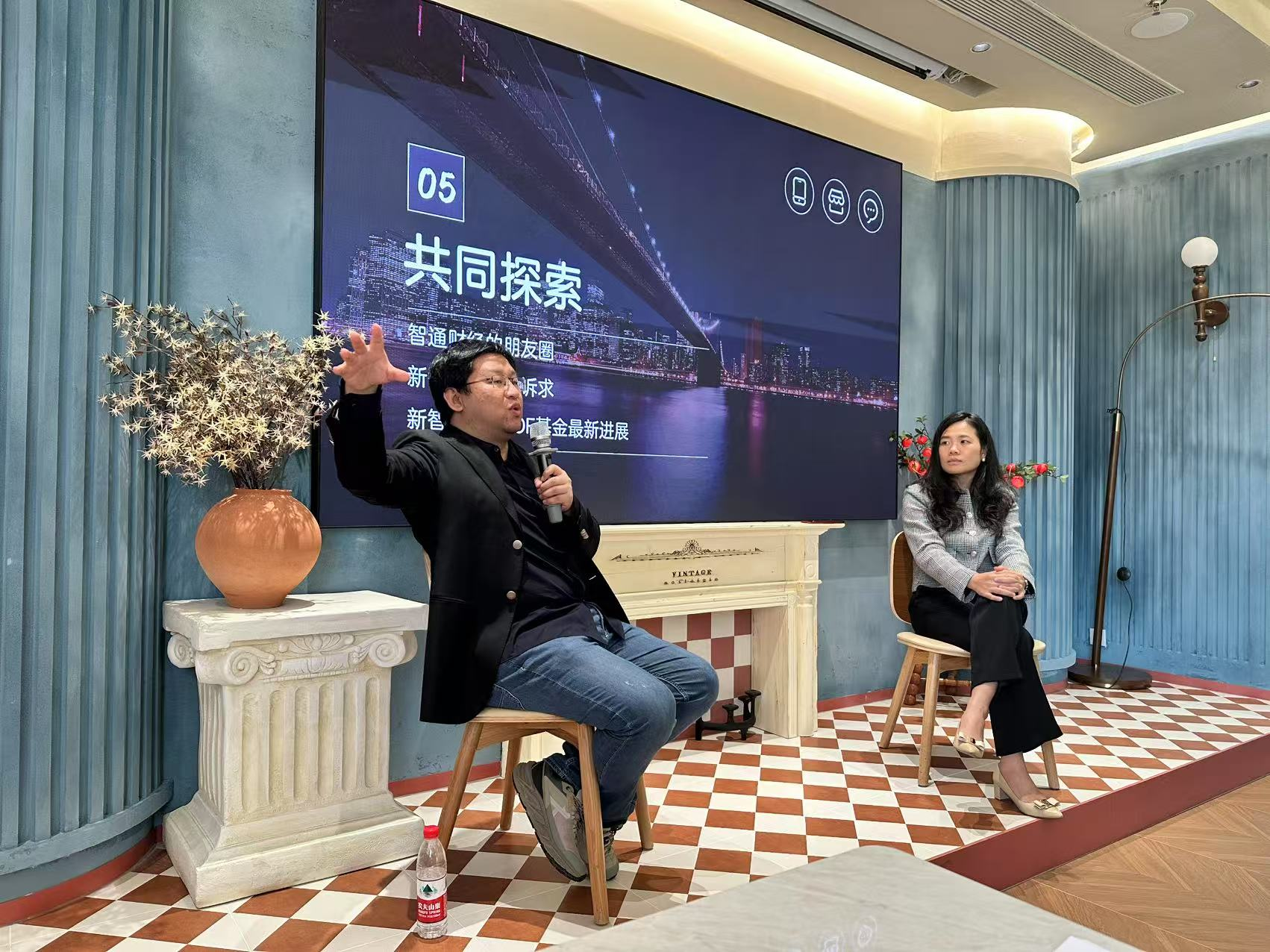
The first closed door meeting of the New Intelligence Roundtable Faction and the US Dollar Foundation was successfully held in Shanghai
01/05/2025

Add the WeCom
 (Mainland) +86 13918483280(Hong Kong) 852-5606 7965
 marketing@inbfund.com
©️2013 - 2026 New Intelligence Future Technology Limited. All Rights Reserved

Customer Service

Add the WeCom