
Hang Seng Investment Management: Maintains a neutral view on Hong Kong stocks, recommends underweighting consumption and overweighting technology.

2026-05-07 19:07

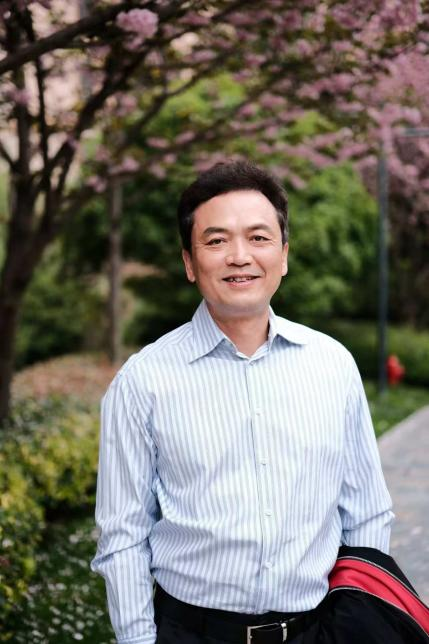
Su Haocheng, the Chief Investment Officer of Hang Seng Investment Management Limited, stated that the bank maintains a neutral view on Hong Kong stocks and continues to believe that "exports remain the main engine of the mainland economy." On the other hand, there is still a need for new catalysts in terms of domestic demand. Against the backdrop of a stable overall macroeconomic performance, the bank expects the government to lean towards policy optimization in the short term rather than adopting large-scale stimulus measures.
Hengsheng Investment Management Limiteds Investment Director Su Haocheng stated that the bank maintains a neutral view on Hong Kong stocks and continues to believe that "exports are still the main engine of the mainland economy." On the other hand, there awaits new catalysts for domestic demand. Against the backdrop of overall stable macroeconomic performance, the bank expects the government to lean towards policy optimization in the short term rather than adopting large-scale stimulus policies.
Regarding Hong Kong stocks, he believes that high-dividend stocks and low volatility styles are favored and outperforming; momentum and growth stocks are lagging, indicating that investors' preferences for Hong Kong stocks are more conservative, leaning towards income and stability. In Asia, except for the Japanese market and US stocks, momentum and growth stocks outperform, showing that investors are more aggressive.
He mentioned that in the past five years, Hong Kong stocks have been more volatile than other markets for the majority of the time. For investors with income as the goal, income-generating strategies such as covered call options may be considered in volatile market conditions; generally, when market volatility and implied volatility rise, option premiums tend to be higher, helping to increase profit potential (but actual dividend levels will still be affected by changes in volatility).
For the A-share and Hong Kong stock markets, he recommends continuing to underweight consumer stocks and overweight technology and export-related stocks that benefit from the AI "super cycle."
He expects the US to cut interest rates twice this year and is relatively bullish on US and Japanese stocks.
Su Haocheng stated that US inflation is under control, but there is still pressure on employment. Currently, the market lacks direction, and there may be opportunities for two interest rate cuts this year.
He mentioned that market sentiment improved this month, with the focus returning to corporate fundamentals. Although there is still uncertainty surrounding the Iran-related situation, the direct impact on macroeconomics and corporate profits is limited in the short term. The US stock market reached new highs mainly driven by the technology sector. Profit growth is the main driver of sustainable stock market growth, so if the US stock market can maintain strong profit growth this year, it is expected to support performance for the rest of the year. With neutral risk appetite, stocks are slightly more attractive than bonds. However, geopolitical news could still cause market fluctuations, and the market is expected to remain somewhat volatile.
On the regional front, he pointed out that Asia's performance may continue to diverge, with South Korea and Taiwan benefiting from AI demand; some ASEAN markets may be relatively weak. Mainland China's economic data shows robust growth, but the market is still waiting for clearer policy catalysts. Overall, the market performance in the US and Japan remains relatively positive. At the portfolio level, it is recommended to maintain diversified allocations, avoiding overweighting stocks or bonds, as well as not concentrating on a single region or asset class, to enhance the portfolio's resilience to fluctuations.
He mentioned that he is more optimistic about stocks, relatively bullish on US stocks, Japanese stocks, and global technology stocks; has a neutral view on Chinese and emerging market stocks in Asia; and is relatively bearish on European stocks. For bonds, he remains bullish on Asian investment-grade bonds; upgrades Asian high-yield bonds to a neutral view. He recommends maintaining a 5-10% allocation to gold in personal wealth.
Hengsheng Investment to launch two active ETFs with covered call options
Hengsheng Investment will launch the "Hengsheng China Index Covered Call Option Active ETF" (03519) and the "Hengsheng Technology Covered Call Option Active ETF" (03589) tomorrow. The two new ETFs aim to provide returns to investors in volatile market conditions, combining stock investment with active covered call option strategies, with the goal of providing monthly dividends.
The "Hengsheng China Index Covered Call Option Active ETF" invests in mainland Chinese companies listed in Hong Kong, while the "Hengsheng Technology Covered Call Option Active ETF" focuses on technology companies listed in Hong Kong. In addition to stock dividends, the two ETFs will also generate option premium income by selling covered call options on the Hengsheng China Enterprise Index and the Hengsheng Technology Index respectively, to enhance the portfolio return and help investors convert market volatility into potential income. Covered call option strategies may limit upside participation when the market rises significantly.
Huang Jingfeng, Director and Chief Executive Officer of Hengsheng Investment Management Limited, stated that as the market remains volatile, many investors are looking for investment solutions that can generate returns while also mitigating risks. The bank is pleased to introduce the new covered call option active ETFs, which can complement the bank's existing high-yield products and further broaden the diverse range of ETF products offered by Hengsheng Investment. By actively selling covered call options at equivalent or out-of-the-money prices, the two ETFs aim to enhance potential returns while hedging against the downside volatility of their related stock holdings, and may outperform passive index strategies in sideways and bear markets.


This popular ETF has again overpriced and suspended trading, with a net asset value increase of 72% so far this year. It has been suspended from trading as many as 52 times.
ETF abnormal fluctuation | Tracking the surge of South Korea ETF in the closing session, South Korean market value has exceeded Canada's, Citigroup raises South Korea's Kospi index target to 8500 points.
RECOMMEND

Advanced investment education | FATCA & CRS leading global tax transparency, who is most affected?
04/08/2025
34 年股市老兵“曾阿牛”:跑赢纳指 110%仍不满足!从第一代股评家到对冲基金管理人的经历
14/06/2025

The first closed door meeting of the New Intelligence Roundtable Faction and the US Dollar Foundation was successfully held in Shanghai
01/05/2025

Add the WeCom
 (Mainland) +86 13918483280(Hong Kong) 852-5606 7965
 marketing@inbfund.com
©️2013 - 2026 New Intelligence Future Technology Limited. All Rights Reserved

Customer Service

Add the WeCom