
Hong Kong Treasury Bureau: Promoting Participation of Home Affairs in Charity Affairs; Hong Kong has the conditions to become a hub for charity business.

2026-05-27 16:43

Chen Haolian said that the business of the family office is developing rapidly, with more funds being established in Hong Kong. At the same time, the family office places great importance on charity and believes that Hong Kong has the potential to become a hub for charitable activities.
On May 27, acting Secretary for Financial Services and the Treasury of Hong Kong, Chan Ho-leung, stated in the Legislative Council of Hong Kong that the government has been implementing a series of measures to support the development of charitable activities in different modes. These measures include providing tax exemptions for eligible charitable organizations, facilitating tax arrangements for charitable funds to be allocated in Hong Kong, promoting multi-party collaboration to strengthen the social support system to assist disadvantaged groups, supporting social entrepreneurs to innovate in response to social needs, and thereby enhancing social cohesion.
Chan Ho-leung introduced that to facilitate charitable organizations in applying for tax exemption under Section 88 of the Regulations, the Inland Revenue Department of Hong Kong has launched standard application forms and provided guidance on writing charitable objectives since June 2023. This is to assist relevant charitable organizations in preparing compliant application documents, thereby shortening the time required for the Inland Revenue Department to process the applications. Taxpayers, including family offices, companies engaged in "philanthropic venture capital" and impact investment, can deduct funds donated to tax-exempt charitable organizations for charitable purposes, recognized as charitable donations, with a minimum total of HK$100. Such donations can be deducted from assessable profits, salaries tax or personal income tax in the relevant tax year. The total amount that can be deducted in any year shall not exceed 35% of the taxpayer's assessable profits or income.
On the other hand, in order to facilitate global asset owners, family offices, and philanthropists in allocating charitable funds in Hong Kong, the Hong Kong government has also introduced corresponding tax arrangements. For example, under the current regime of tax concessions on family investment holding tools, exempted charitable organizations are allowed to hold up to 25% beneficial interests solely by qualified single-family offices and/or their family investment holding tools. The government also proposes to expand the definition of "fund" under the Unified Fund Tax Exemption Scheme to cover donation funds, in order to facilitate the use of this tax-exempt regime for such funds.
Chan Ho-leung stated that family office business is developing rapidly, with more funds being domiciled in Hong Kong, and family offices place a strong emphasis on charitable activities. They believe that Hong Kong is definitely capable of becoming a hub for charity businesses.
The Financial Services and the Treasury Bureau of Hong Kong issued a policy declaration on the development of family office business in Hong Kong in March 2023, outlining the relevant policy positions and measures to establish a vibrant ecosystem for global family offices and asset owners. Among them, the Wealth Succession Academy under the Hong Kong Monetary Authority provides a platform for asset owners, wealth inheritors, and the family office industry to exchange, share knowledge, and train talent. As of the end of March 2026, 55 family philanthropists have participated in this platform, recommending a total of 12 non-governmental organizations and charitable projects.
In terms of social welfare, the Hong Kong government is actively promoting tripartite cooperation among the government, business, and the public. Under the government's policy guidance, the business sector provides support in terms of funds, venues, technology, and talent, while non-governmental organizations leverage their frontline insights, service experience, and regional networks to jointly promote and implement multiple service projects, collaborating to build a more diverse and sustainable social support system. The government will continue to assist disadvantaged groups through government, business, and public cooperation, including establishing platforms to promote philanthropic initiatives by family offices and providing resources, as well as implementing projects to benefit disadvantaged communities.
In addition, the Hong Kong government established the Social Innovation and Entrepreneurship Development Fund (SIE Fund) in 2013, with a total allocation of HK$1 billion. Since its establishment, the fund has allocated approximately HK$800 million to support various programs. The fund has supported 755 projects, benefiting a total of approximately 600,000 individuals. In order to optimize resource utilization and fund operation, the SIE Fund has appointed a consultancy company to conduct a strategic review of the fund's funding mechanism and operating model, which is expected to be completed by the end of 2026.


RECOMMEND

Advanced investment education | FATCA & CRS leading global tax transparency, who is most affected?
04/08/2025
34 年股市老兵“曾阿牛”:跑赢纳指 110%仍不满足!从第一代股评家到对冲基金管理人的经历
14/06/2025
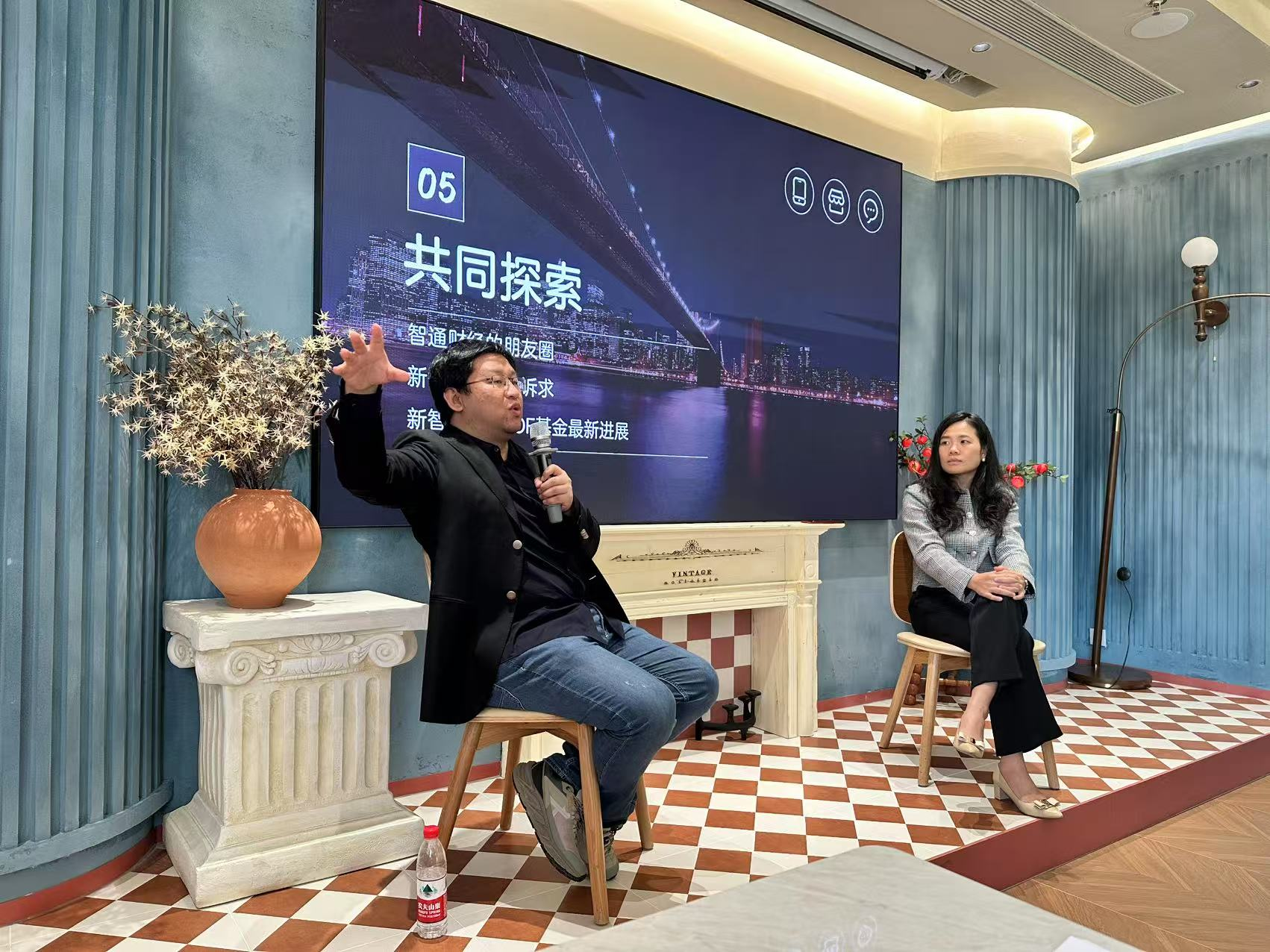
The first closed door meeting of the New Intelligence Roundtable Faction and the US Dollar Foundation was successfully held in Shanghai
01/05/2025

Add the WeCom
 (Mainland) +86 13918483280(Hong Kong) 852-5606 7965
 marketing@inbfund.com
©️2013 - 2026 New Intelligence Future Technology Limited. All Rights Reserved

Customer Service

Add the WeCom