
Virtue Fund: Iran Conflict Increases Market Uncertainty, Hong Kong Stocks Have Relative Resilience

2026-03-24 15:27

Grace Chen, Chief Investment Officer of Huili Fund, pointed out that with the outbreak of the Iran conflict, market volatility has significantly increased. As the United States, Israel, and Iran all take a hardline stance, the conflict situation continues to escalate, further increasing market uncertainty.
Grace Chung, Chief Investment Officer of Weller Fund, pointed out that with the outbreak of the Iran conflict, market volatility has significantly increased. Due to the strong stance taken by the United States, Israel, and Iran, the conflict situation continues to escalate, further increasing market uncertainty.
The core impact of this event on the market and the global economy lies in the disruption of energy supply. With the blockade of the Strait of Hormuz entering its second week, along with some Gulf countries' oil reserves nearing depletion and some oil and gas facilities being attacked, global crude oil production is expected to decrease by approximately 4 to 8 million barrels per day, equivalent to about 4% to 8% of global daily oil demand. Against this backdrop, oil prices have surged from $73 per barrel before the war to over $90 per barrel, reaching as high as $120 at one point. Meanwhile, the impact on liquefied natural gas (LNG) supply is even more significant, with prices in some countries more than doubling. Global inflation and stagflation risks are therefore on the rise. Although the United States is considering allowing Russian oil to fill some supply gaps, and the G7 is discussing releasing strategic oil reserves, the implementation of these measures will still take time, meaning energy prices may remain high in the short term. It is widely expected that the timing of rate cuts by the United States and other major economies may be delayed by about a quarter due to the duration of the energy supply disruption and its actual impact on inflation.
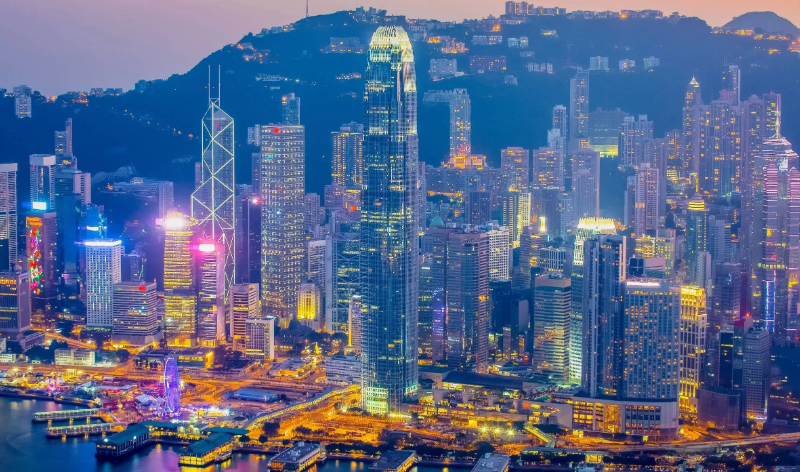
As A-shares and Hong Kong stocks have underperformed other Asian markets this year, and with Northbound investment funds continuing to take advantage of the lower prices and overall attractive valuations, the downside risks posed by the conflict are relatively low. Recent market performance has also shown that A-shares and Hong Kong stocks have demonstrated relatively strong resilience compared to other markets in the region.
Since the outbreak of the Iran conflict, volatility in Asian stock markets has significantly intensified, with Taiwan and South Korea experiencing the most pronounced fluctuations. As these two markets led intra-regional stock markets in the first two months of this year, a significant correction and profit-taking situation occurred due to rising valuations and crowded positions. In addition, India and ASEAN countries, with a high dependence on oil imports, are concerned that rising oil prices could push up inflation in these regions, further delaying their rate cut timelines, resulting in some impact on the related markets.
On the other hand, demand for artificial intelligence has not been affected by the conflict, and an increase in global defense spending may further drive demand for AI. Therefore, while Taiwan and South Korean markets have experienced significant volatility due to profit-taking and risk aversion, the fundamentals of these markets, especially in the technology hardware sector, have not changed significantly. With the market undergoing adjustments, and the recent cooling of investment hype and valuations, overall, this may help the market return to a healthier development track.
Credit spreads on Asian investment-grade bonds remain at relatively tight levels, and have even narrowed to levels below those of investment-grade bonds in the United States. With rising oil prices pushing up inflation expectations and concerns about the widening fiscal deficit due to the conflict, US Treasury yields have continued to rise recently. In this environment, duration risk remains high, while trends in credit spreads also need to be closely monitored. Nevertheless, demand for Asian investment-grade bonds in the market remains strong.
Spreads on Asian high-yield bonds continue to be well below historical averages in a tight range. With limited new bond supply, investors are generally concentrated on a small group of Asian high-yield bond issuers in the ongoing search for yield environment. If the conflict continues and further elevates market risk aversion and liquidity tightening risks, the risk of widening spreads may rise. In addition, in the US high-yield bond market, concerns are mounting over default risks and spread widening due to cracks appearing in private credit and bank loan markets. While the fundamentals of Asian high-yield bonds are relatively solid, the aforementioned events may still have a certain degree of spillover effect.
Spreads on emerging market bonds remain relatively tight, but investor demand remains strong. Meanwhile, rising oil prices have a supportive effect on the overall economy of Latin America.
In the current conflict environment, gold prices continue to show resilience. Despite risk aversion driving the strengthening of the US dollar, gold prices are relatively less affected compared to other precious metals, indicating that gold still has hedging properties against geopolitical risks. Furthermore, central banks around the world continue to increase their gold holdings to diversify their dependence on US Treasury assets. Meanwhile, institutional investors' allocation to gold remains relatively low, presenting an opportunity for potential gradual increases.
Compared to single assets or traditional balanced portfolios, a diversified asset strategy can provide lower volatility. However, the correlation between risky assets such as stocks, corporate bonds, and commodities has significantly increased recently. In the current uncertain market conditions, stable sources of income will be the key driver of investment returns.


RECOMMEND
Advanced investment education | FATCA & CRS leading global tax transparency, who is most affected?
04/08/2025

34 年股市老兵“曾阿牛”:跑赢纳指 110%仍不满足!从第一代股评家到对冲基金管理人的经历
14/06/2025

The first closed door meeting of the New Intelligence Roundtable Faction and the US Dollar Foundation was successfully held in Shanghai
01/05/2025

Add the WeCom
 (Mainland) +86 13918483280(Hong Kong) 852-5606 7965
 marketing@inbfund.com
©️2013 - 2026 New Intelligence Future Technology Limited. All Rights Reserved

Customer Service

Add the WeCom