
First quarter active equity "dark horse" rankings: 29 funds with a return of over 20%, seven public funds stage a "group army" breakthrough.

2026-04-03 11:35

In the first quarter, 29 actively-managed equity funds had a return of over 20%, with seven public funds making the list together, and the performance of small and medium-sized companies being eye-catching.
The first quarter with a rise and then a fall, with many hot topics, has come to an end. The satellite started, HALO relayed, the power sector rose, the disturbance of the US-Iran conflict disrupted the rhythm, and it ended with the return of innovative drugs. The overall market making experience was average, as evidenced by the indices. Aside from the cyclical stocks concentrated in the CSI 500 and the micro-cap stocks in the CSI 2000 index, the Shanghai Composite Index, the Kechuang 50, and the CSI 300 all closed the quarter in the negative.
How did public funds perform? Although regulation does not encourage quarterly or short-term rankings, the first quarter of each year is a window to observe the style of the whole year. Besides pure performance, this year's active equity products are particularly noteworthy.
In the overall market this year, there were 29 active equity funds with a return rate of over 20%. Interestingly, out of the top 30 ranked funds in the market currently, 7 fund companies - China Life Anbang, Yinhe, Huashang, Hongtu Innovation, Xibu Lide, Ping An, and Huatai Bairui - "grouped" their way onto the list.
Among these 7 companies, at least two products from each company made it to the list simultaneously, demonstrating a strong "group" combat capability. This was more evident in smaller fund companies. Group breakout to some extent represents the fund manager's precise bet on a specific track, reflecting the overall strength of the fund company's research team.
Overall characteristics include: First, outstanding fund managers are mostly young people, but veterans are equally energetic, such as Tang Xiaobin from GF Fund. Secondly, the integration of industry research and investment is showing results, especially when different fund managers from the same company are leading, indicating team decision-making. Thirdly, in terms of company dimension, smaller funds are leading, with big ETF factories, such as Huatai Bairui, focusing on active equity, while traditional track-type companies are also making efforts.
China Life Anbang and Yinhe Fund each had 4 products on the list
China Life Anbang Fund stood out in this quarter's list, with 4 products managed by fund managers Yan Kun, Meng Yijia, and Qi Shanbin ranking in the top ten of the quarterly performance list.
China Life Anbang's digital economy and strategic selection held second and third place, managed by Yan Kun, followed closely by China Life Anbang's industry upgrade managed by Meng Yijia, which ranked fourth. Meng Yijia and Qi Shanbin jointly managed China Life Anbang's core industry, ranking fourteenth.
As an insurance-based fund company, China Life Anbang Fund excels in fixed income products. How did their equity products break through? According to public information, after Yu Yong took over as chairman of China Life Anbang Fund, the company optimized its structure while continuing to leverage its strengths and promote business transformation and innovation, including enhancing equity positions in existing structured products, launching new ETFs, and implementing quantitative strategies.
For example, in the case of China Life Anbang's digital economy managed by Yan Kun, the fund has a significant allocation in the technology sector, particularly focusing on the AI industry chain. Yan Kun, a relatively young fund manager who previously worked as a researcher at Jin'e Fund, joined China Life Anbang in 2018 and has risen from a researcher assistant to fund manager, with only 2.26 years of experience as a fund manager, making him a product of China Life Anbang's training.
Old equity giant Yinhe Fund also did well this quarter, with four products managed by Wang Ligang ranking in the top thirty, including Yinhe Tongli Selection (5th), Yinhe Internal Demand Selection (12th), Yinhe Growth Pioneer (15th), and Yinhe Growth Intelligence (25th).
Wang Ligang, a middle-aged fund manager, has a diverse investment portfolio that includes gold, innovative drugs, military trade, and aviation, displaying a strong grasp on various sectors.
It is worth noting that Yinhe Tongli Selection was originally co-managed with Liu Hui. After Liu Hui passed away in January this year, Wang Ligang took over the management on his own. In Yinhe's recently released annual report, he stated that he will continue to inherit Liu Hui's investment philosophy, focusing on industry, value, and long-term investment, aligning with industry trends in sector selection and going against market sentiment in specific trades.
Xibu Lide, Huashang, and Hongtu Innovation each had three products in the top rankings
Xibu Lide, Huashang, and Hongtu Innovation each had three products on the list, with the difference being that all three products from Xibu Lide and Hongtu Innovation were managed by a single fund manager.
The three Xibu Lide-listed funds were all managed by He Qi, including Xibu Lide New Power (6th), Xibu Lide Strategic Preferred Selection (9th), and Xibu Lide Industry Theme Preferred Selection (11th).
Before joining Xibu Lide in 2020, He Qi worked at Everbright Sun Hung Kai. He currently serves as the Assistant General Manager, Chief Investment Officer (Equity), General Manager of the Equity Investment Department, and General Manager of the Research Department at Xibu Lide. He has a macro perspective, has a keen eye for resource investments, and continuously updates his research framework. He integrates macro perspectives, industry depth, quantitative width, and individual stock precision throughout the entire investment decision-making process, actively using AI and quantitative tools to enhance research efficiency.
As a manager, He Qi places great emphasis on team development, establishing a consensus asset collaboration mechanism, and adopting a model of "collective discussion + individual decision-making" in team mode.
With a distinct technology style, Hongtu Innovation Fund, managed by Gai Junlong, had three products - Hongtu Innovative New Technology (7th), Hongtu Innovative Technology Innovation (22nd), and Hongtu Innovation Scene Return (23rd) - on the list.
This is not the first time Gai Junlong has shone. With nearly 20 years of experience in the securities industry and 11 years of investment management experience, he, along with Yang Kai, Peng Gan, and Zhang Xiaoren, are known as the "Four Little Dragons" of Baoying.
In terms of investment strategy, Gai Junlong combines medium-term industry prosperity research and bottom-up stock selection. His investment perspective is broad, rotating within the same industry based on valuation changes in stocks and sub-sectors, and adjusting flexibly between different industries based on market conditions. Joining Hongtu Innovation in 2018, the fund he has managed the longest is Hongtu Innovation Transformation Selection, with a total return rate of 373.14%.
By 2025, Gai Junlong's performance has been impressive. In the top thirty of the first quarter this year, his products, along with those managed by Zhang Mingxin of Huashang Fund and Chen Wenkai of Huatai Bairui Fund, have all doubled in the past year.
On the Huashang Fund side, Zhang Mingxin's Huashang Balanced Growth (8th) and Huashang Zhiyuan Return (10th) both made it to the top ten, performing very steadily. In addition, Huashang's high-end equipment manufacturing A fund managed by Chen Xiaqiong and Peng Wu jointly entered the list at 27th.
Huashang is a good sample to observe what a fund company does when its key fund manager, Zhou Haidong, leaves. Clearly, the company's equity performance has been supported. The rising star, Zhang Mingxin, has unearthed alpha capabilities amid industry trends. Subsequently, his products have risen in the industry, with an investment approach rooted in industry trends, value-focused, and long-term. While Zhou Haidong has left, the company is maintaining its equity performance stability. Zhang Mingxin has risen to prominence in the tens of billions, digging into alpha capabilities amid industry trends.
The information about the Huashang fund is based on the article provided.Go deep into the AI and technology track, showing the necessary sharpness.Huatai Bairui and Ping An Fund each have two products on the list.
Among the ETF giants, Huatai Bairui Fund has 2 products on the list, both managed by the same fund manager, Chen Wenkai. They are Huatai Bairui Quality Growth (ranked 21st) and Huatai Bairui Quality Selection (ranked 30th).
Aside from the ETF market, Huatai Bairui's active equity performance has also improved. Recently, Huatai Bairui's assistant general manager, investment director, and fund manager Dong Chen has been promoted to vice general manager.
Compared to the trend of vice general managers focusing on research and analysis, the market has not seen many cases of "investment leading to promotion," indicating the company's emphasis on active equity.
In 2025, Huatai Asset Management's chairman Cui Chun joined Huatai Bairui Fund as general manager. Although he is rarely seen in public, Huatai Bairui has several important initiatives worth noting, such as rebranding ETFs starting with the Shanghai-Shenzhen 300 ETF to establish a strong brand. Additionally, promoting Dong Chen's development in active equity and strengthening internal talent development, coupled with the already strong quantitative team, make Huatai Bairui's business worth paying attention to in the future.
As for Chen Wenkai, he has a typical career trajectory from seller to buyer, similar to Dong Chen. He has been internally trained by Huatai Bairui and began managing products in 2023. Focusing on AI computing power, he has managed products for over 2 years, and his latest management scale has also exceeded one hundred billion.
The other fund with two products on the list is Ping An Fund, managed by Yu Yao and Yao Wenqiang's Ping An Technology Innovation (ranked 20th) and Ping An Xin'an (ranked 26th) managed by Lin Qingyuan.
Strictly speaking, Ping An Fund is also an insurer-owned fund company that previously excelled in fixed income. In recent years, they have been bold in appointing new talents, from Zhou Sicong and Zhai Sen last year, to Lin Qingyuan, Yu Yao, Yao Wenqiang, Mo Jiao and other fund managers this year, consistently producing top products in the competitive market.
During the company's strategic meeting at the beginning of the year, Ping An Fund's equity investment director Shen Ai introduced the company's research platform system, focusing on creating eight professional research teams covering growth, value, and balanced investment styles, and deploying nine major tracks and over 30 sub-strategies based on in-depth industry research. In summary, they have a broad and sharp layout strategy.
Over the past year, Ping An Fund has clearly accelerated its fund layout pace and has a clearer direction. Reporting 66 products in 2025 and launching 40, they have maintained a strong pace of new launches this year.
Tang Xiaobin, Tan Xuan, and Dong Xuan each have their own characteristics
Several single-product fund managers on the list are also worth noting.
First is Tang Xiaobin, who manages Guangfa Vision Wisdom Select. With a first-quarter yield of 58.03%, he primarily focuses on storage and related semiconductor equipment holdings, as well as leading companies in specific sub-sectors.
With over 11 years of product management experience, Tang Xiaobin is a veteran of Guangfa, deeply rooted in the technology sector. He believes that the A-share technology sector is undergoing a profound structural change in 2026. He believes that if the years from 2023 to 2025 were the "Cambrian Explosion" of AI technology, mixed with some noise and disorderly competition, then 2026 is about to enter the "Darwinian moment." Among his heavy holdings last year were two stocks that doubled in value, Biweistorage and Puranv.
Tan Xuan, who manages Qianhai Kaiyuan Value Strategy, is also worth paying attention to. Firstly, as a veteran company in the industry, Qianhai Kaiyuan often has products at the top. Secondly, Tan Xuan's own experience is notable, as one of the few who transitioned from being a FOF fund manager to an active equity manager. He previously managed Qianhai Kaiyuan Yuyuan, which ranked second in its category. In 2023, he stepped down from FOF to become the fund manager of Qianhai Kaiyuan Value Strategy.
In terms of style, he is relatively stable, pursuing absolute returns. At the same time, in times of good market conditions, he adopts a barbell strategy with a certain percentage of investment in high-growth sectors, such as computing power and resources. For 2026, he predicts that the overall market volatility will significantly increase compared to last year, requiring attention to stage-wise pullback control.
Dong Xuan, under the banner of SinolinkAiyuan, is also a young fund manager nurtured by the company. He joined SinolinkAiyuan in May 2021 and began managing products in September 2024. His expertise lies in consumption, industry, and power sectors, with a focus on investing in companies' balance sheets, strictly avoiding companies with poor balance sheet performance. With a short management tenure, he still needs more observation, but has already been noticed by the market after managing for only a year and a half, showing promising potential.
This article is from "Cai Lianshe", translated by GMTEight, edited by Jiang Yuanhua.


RECOMMEND

Advanced investment education | FATCA & CRS leading global tax transparency, who is most affected?
04/08/2025
34 年股市老兵“曾阿牛”:跑赢纳指 110%仍不满足!从第一代股评家到对冲基金管理人的经历
14/06/2025
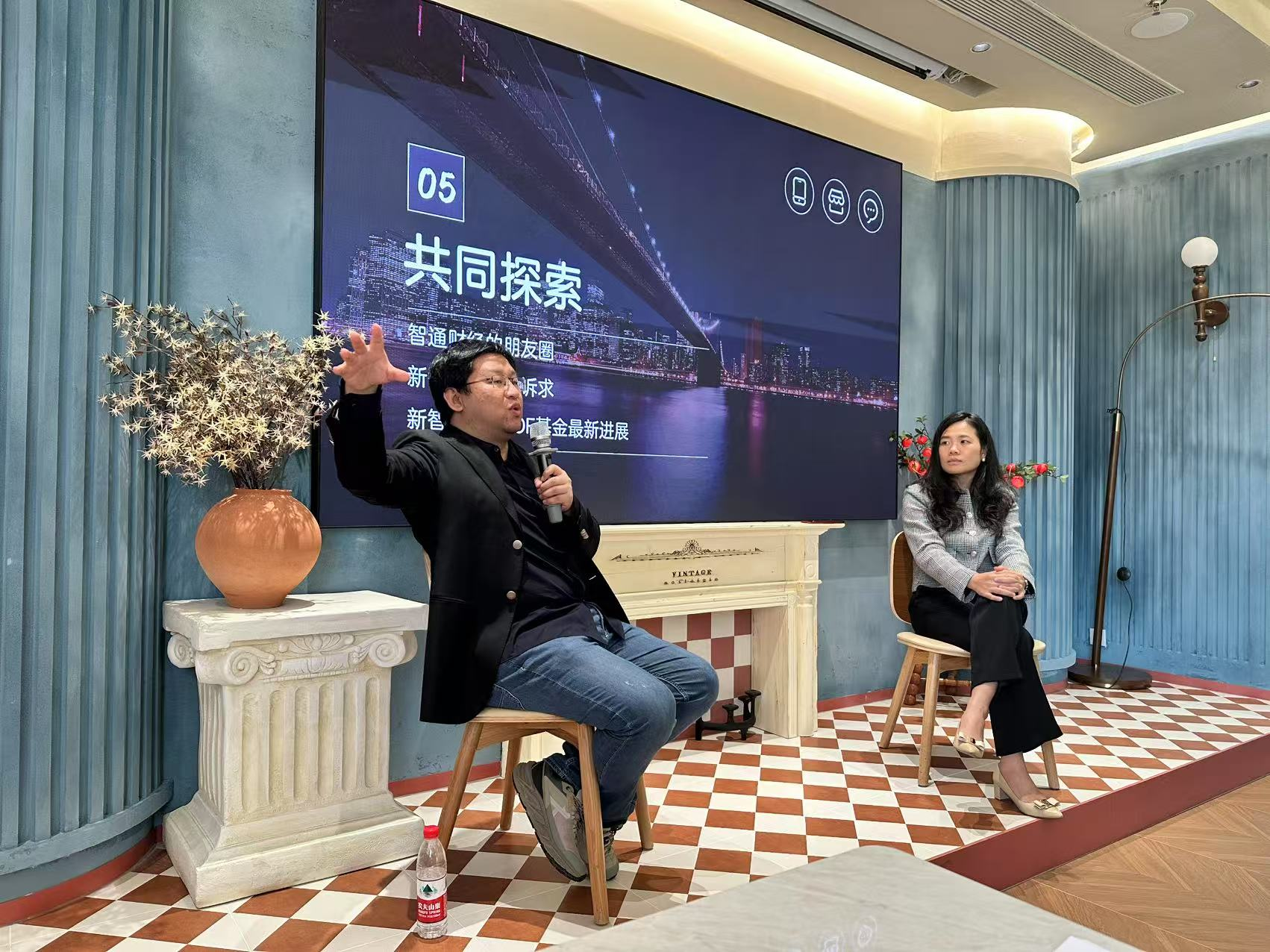
The first closed door meeting of the New Intelligence Roundtable Faction and the US Dollar Foundation was successfully held in Shanghai
01/05/2025

Add the WeCom
 (Mainland) +86 13918483280(Hong Kong) 852-5606 7965
 marketing@inbfund.com
©️2013 - 2026 New Intelligence Future Technology Limited. All Rights Reserved

Customer Service

Add the WeCom