
Under the sharp rise, the new trend of ETF outflows on a weekly basis cannot be ignored. The top three public funds have all shrunk by more than 200 billion yuan in size so far this year.

2026-04-12 21:47

A-share market surged in a single week, while non-commodity ETFs saw the largest weekly net outflow since February; non-commodity ETFs shrank by over 880 billion yuan since the beginning of the year, leading to changes in the rankings of top asset managers.
As A shares saw the largest single-week increase in recent weeks, non-monetary ETFs also saw accelerated net outflows.
Wind data shows that as of April 10th, the Wind Full A Index had accumulated a 5.15% increase for the week, the largest weekly increase since late January this year. However, non-monetary ETFs saw a net outflow of 32.832 billion yuan for the week, making it the week with the highest net outflow since February.
Amidst the trend of net outflows, broad-based ETFs continued to see the highest net outflows, while thematic ETFs also experienced significant net outflows, with bond ETFs seeing net inflows. Overall, non-monetary ETFs have shrunk by over 880 billion yuan since the beginning of the year, with the latest scale falling below the 5 trillion yuan mark to 4.96 trillion yuan.
Contrary to the trend, there were instances of concentrated buying in certain broad ETFs. For example, ETFs linked to the CSI 500 attracted 8.335 billion yuan in net inflows this week, with Southern CSI 500 ETF seeing 6.14 billion yuan in net inflows and China Asset CSI 500 ETF seeing 1.383 billion yuan in net inflows.
Thematic index ETFs also saw significant net outflows for the week, totaling 13.905 billion yuan, while industry index ETFs saw net outflows of 6.537 billion yuan. Profit-taking continued in both categories.
Looking at a longer timeframe, the ETF market has shrunk by 887.164 billion yuan so far this year, to 5.13 trillion yuan. Among them, the scale of non-monetary ETFs has fallen to 4.96 trillion yuan, also shrinking by over 880 billion yuan since the end of last year.
During this period, there have been changes in the rankings of the top non-monetary ETF managers. As of April 10th, Huaxia Fund, E Fund, and Huatai Bairui Fund are the top three non-monetary ETF managers, with Guotai Fund rising 3 spots to fourth place and Southern Fund dropping to fifth place. Similarly, Jiashi Fund, which also saw a decrease in scale of over 100 billion yuan, dropped two spots to seventh place. Furthermore, Fuguo Fund and Huitianfu Fund saw their rankings rise despite a decrease in scale, while Boshin Fund and Haifutong Fund saw their scales grow against the trend, with their rankings also rising.
Bond ETFs or industry thematic ETFs have become the main driving force behind the growth in scale. For example, within Huitianfu Fund's ETFs, the scale of the Huitianfu Short-term Bond ETF grew by 22.125 billion yuan this year, reaching 92.348 billion yuan, with the Huitianfu Shanghai Construction Bond ETF also growing by over 10 billion yuan to 43.921 billion yuan.
Within Guotai Fund's ETFs, both the Guotai Gold ETF and the Guotai CSI Semiconductor Materials and Equipment Thematic ETF attracted over 10 billion yuan in investment this year. As of April 10th, the scale of the Guotai Gold ETF was 42.475 billion yuan, an increase of 12.991 billion yuan from the end of last year, representing a growth rate of 44.06%, while the scale of the Guotai CSI Semiconductor Materials and Equipment Thematic ETF was 21.222 billion yuan, an increase of 12.212 billion yuan from the end of last year, representing a growth rate of 135.51%.
Additionally, Guotai Fund's ETFs such as the Guotai Hang Seng A-share Power Grid Equipment ETF, the Guotai CSI Oil and Gas Industry ETF, and the Guotai CSI All Share Communication Equipment ETF have also seen scale growth of over 3 billion yuan this year.


RECOMMEND

Advanced investment education | FATCA & CRS leading global tax transparency, who is most affected?
04/08/2025

34 年股市老兵“曾阿牛”:跑赢纳指 110%仍不满足!从第一代股评家到对冲基金管理人的经历
14/06/2025
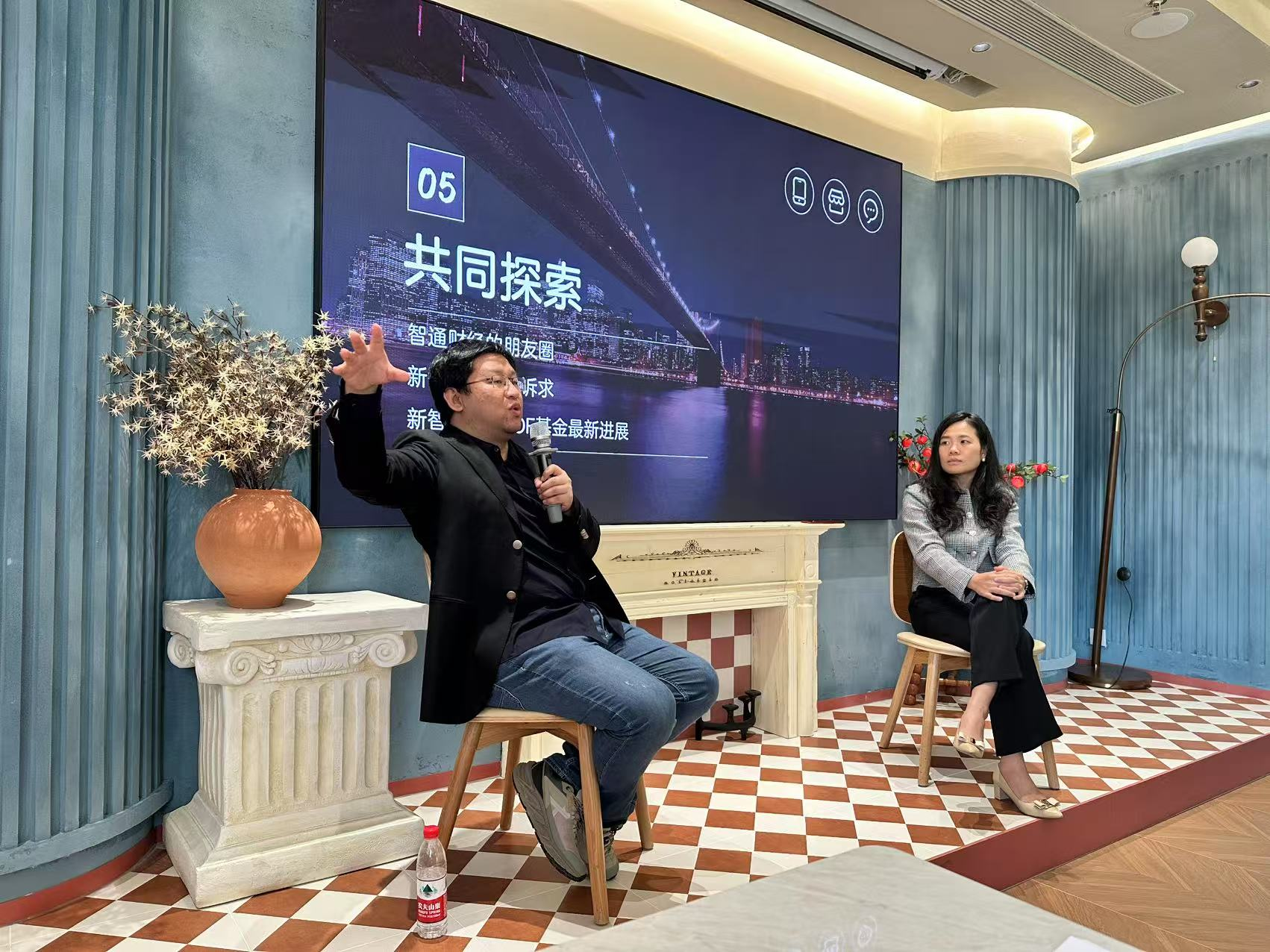
The first closed door meeting of the New Intelligence Roundtable Faction and the US Dollar Foundation was successfully held in Shanghai
01/05/2025

Add the WeCom
 (Mainland) +86 13918483280(Hong Kong) 852-5606 7965
 marketing@inbfund.com
©️2013 - 2026 New Intelligence Future Technology Limited. All Rights Reserved

Customer Service

Add the WeCom