
Standing in the "different light", this QDII has the best performance, with a heavy position not in South Korean chip stocks but in Chinese and American technology stocks.

2026-05-19 07:06

This fund focuses on the global AI computing power hardware track, with heavy positions in leading companies such as Nvidia, Broadcom, and TSMC. It is worth noting that the fund also focuses on the optical field, with investments in leading domestic optical module companies such as Zhongji Xuchuang and Newiseph.
As of May 16, Tianhong Global High-end Manufacturing Hybrid (QDII) A achieved a year-to-date return of 75.79%, ranking first among active QDII funds in terms of performance.
It is worth mentioning that the fund did not focus on the hot Korean market at the end of the first quarter, but instead achieved impressive performance through strategic allocation of Chinese and American technology stocks.
At the end of the first quarter, the fund's holdings in Chinese and American equity assets accounted for 37.38% and 31.90% respectively, totaling nearly 70%. In addition, the fund also allocated positions in markets such as Japan, Hong Kong, the Netherlands, and Germany.
In terms of stock selection, the fund focused on the global AI hardware race, heavily investing in leading companies such as Nvidia, Broadcom, and TSMC. It is worth noting that the fund also positioned itself in the optics sector, with holdings in companies like Hangzhou Zhonghao and Opticreate.
Based on long-term industry trends, Liu Dong stated that he will continue to focus on technology hardware related to artificial intelligence, investing mainly in computing chips, storage chips, high-speed interconnects, as well as power equipment and liquid cooling equipment related to data center infrastructure. The fund will continue to focus on industries and companies with favorable business cycles and high demand for products.
Despite not heavily investing in Korean stocks, this QDII fund has emerged as the top performer.
As of May 16, Tianhong Global High-end Manufacturing Hybrid (QDII) A achieved a year-to-date return of 75.79%, ranking first among all active QDII funds in terms of performance.
Interestingly, data from the regular report showed that by the end of the first quarter of this year, Tianhong Global High-end Manufacturing Hybrid (QDII) A did not allocate much to the recently popular Korean market.
The fund has China and the United States stock markets as its core allocation directions. As of the end of the first quarter of this year, the fund's holdings in Chinese and American equity assets accounted for 37.38% and 31.90% respectively, totaling nearly 70%. The fund also allocated more to the Japanese stock market, with a holding ratio of 9.56%.
In addition, the fund also lightly allocated to the Hong Kong, the Netherlands, and Germany markets, with holdings accounting for 2.79%, 0.71%, and 0.67% respectively.
The fund's manager Liu Dong pointed out in the first quarter report, "The fund mainly invests in high-end manufacturing companies in North America and the Asia-Pacific region, focusing on companies in the high-end manufacturing industry with core technology, innovation capability, high added value, international competitiveness, and leading the direction of industry development. The investment markets mainly include the U.S. stock market (including American Depositary Receipts), Japanese stock market, Shanghai and Shenzhen stock markets, as well as the Hong Kong stock market."
Apart from Tianhong Global High-end Manufacturing Hybrid (QDII), another active QDII fund achieved a year-to-date return of over 70%, but this active QDII fund focused on the Korean stock market.
Specifically, the Funde Emerging Markets Hybrid (QDII) A achieved a year-to-date return of 74.37%, with holdings of 6.76% in Samsung Electronics and 8.65% in SK Hynix by the end of the first quarter of this year.
The strategic allocation in Chinese and American technology sectors is the key reason why Tianhong Global High-end Manufacturing Hybrid (QDII) A, without investing in Korean stocks, was able to achieve impressive returns.
In March of this year, there was market turbulence in the AI-related sub-sectors. However, Liu Dong believes, "Looking past the current turbulence, we are more focused on the long-term trend of artificial intelligence development. The fund adjusts its positions amidst the volatility, focusing more on the bottleneck industries that restrict large-scale computing power deployment, and cherishing investment opportunities brought about by market corrections due to rising oil prices. Traditional energy sources and the Middle East crisis cannot stop the advancement of the technology wave."
Focusing on industries with positive business cycles and diversified allocation in AI sub-sectors
Looking at the top ten major holdings, Tianhong Global High-end Manufacturing Hybrid (QDII) held multiple semiconductor leading companies from China and the U.S. By the end of the first quarter, the fund's top holding was Nvidia, with a holding ratio of 3.65%. In addition, the fund also held positions in Broadcom, Tower Semiconductor, Lumentum, Coherent, and other U.S. computing companies, as well as Taiwan Semiconductor Manufacturing Company.
It is worth noting that the fund also positioned itself in the optics sector, holding leading companies such as Accelink and Neophotonics, and also invested in AI infrastructure companies such as Sihui Technology.
Importantly, the overall holdings of this fund are diversified, with the top holding stock, Nvidia, accounting for only 3.65% of the net asset value, and the top ten major holdings accounting for only 26.13%. This strategy effectively mitigates individual stock volatility risks, and the fund maintains a relatively high industry concentration by focusing on sectors such as semiconductors and AI computing hardware, contributing to a strong portfolio.
In the future, the fund manager Liu Dong will continue with this allocation strategy. In the regular report, Liu Dong stated that he will continue to focus on technology hardware related to artificial intelligence, mainly investing in computing chips, storage chips, high-speed interconnects, as well as power equipment and liquid cooling equipment related to data center infrastructure. The fund will continue to focus on industries and companies with positive business cycles and high demand for products.
Regarding stock selection, in addition to paying attention to financial indicators and performance guidance of listed companies, Liu Dong and his team pay more attention to the technological competitiveness barriers of companies in specific industry segments and fields, while relatively downplaying factors such as short-term quarterly financial reports and market valuations.
Liu Dong believes that in the short term, individual stock performance can be easily impacted by various incidental factors. However, from a longer-term perspective, technological competitiveness barriers are the most important driving force for listed companies to stand out in industry competition, as well as the basis for companies to achieve good financial returns.


ETF anomaly | South Korean ETFs lead the declines, South Korean stocks and bonds face selling pressure, storage chip supply may sharply increase in the second half of next year.
ETF Daily Report (05.18) | South Korean stocks rebound in V shape, Southern doubles its long position in Samsung Electronics (07747) with a nearly 4% increase. Tensions between the US and Iran intensify, leading to a strong performance of oil and gas ETFs.
RECOMMEND

Advanced investment education | FATCA & CRS leading global tax transparency, who is most affected?
04/08/2025
34 年股市老兵“曾阿牛”:跑赢纳指 110%仍不满足!从第一代股评家到对冲基金管理人的经历
14/06/2025
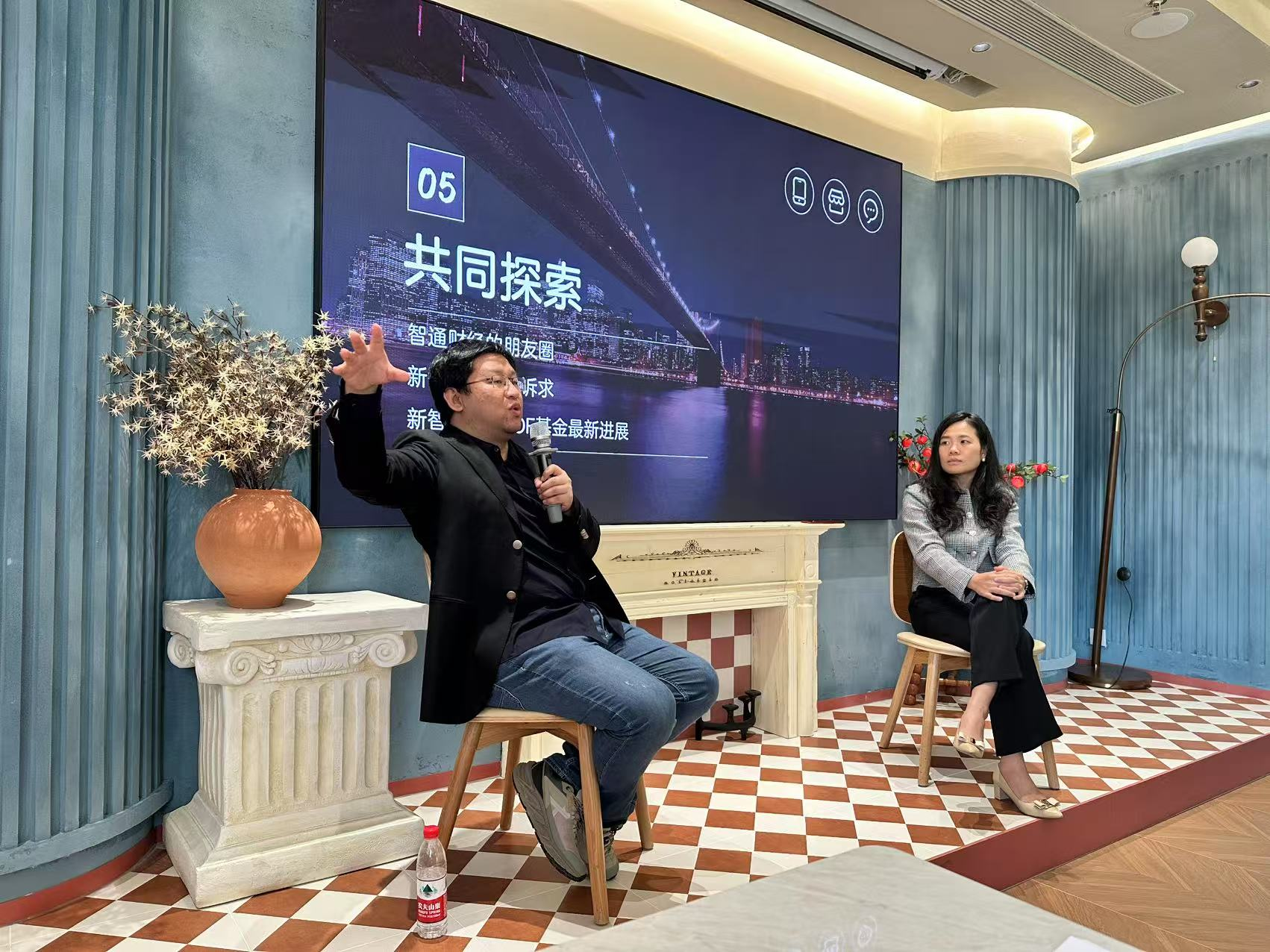
The first closed door meeting of the New Intelligence Roundtable Faction and the US Dollar Foundation was successfully held in Shanghai
01/05/2025

Add the WeCom
 (Mainland) +86 13918483280(Hong Kong) 852-5606 7965
 marketing@inbfund.com
©️2013 - 2026 New Intelligence Future Technology Limited. All Rights Reserved

Customer Service

Add the WeCom